The ideation ritual most content teams run is the same one every guide teaches. Pull the outlier spreadsheet, sort competitors by view count, cross-reference against your own top posts, and pick the shape that keeps showing up. Ship a version of it next week. Track the number. Repeat.
It works, right up until the point that it doesn't.
Source: The local-maximum framing is from Aprilynne Alter's 2026 video essay "Why No One Makes 'Original' Videos Anymore". The application to weekly content planning, the argument for reserving one slot per calendar, and the customer-interview-as-source note are ours.
Every proven format is a smaller hill you're climbing
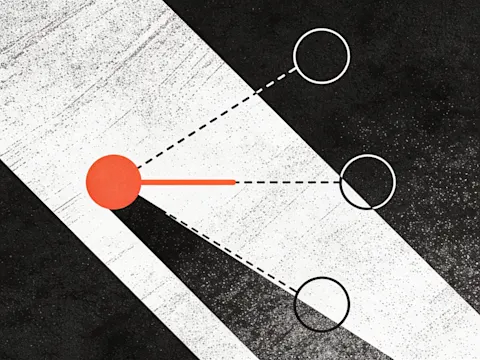
There's a concept in machine learning called the local maximum. A hill-climbing search takes every step that improves the score, over and over, until it hits a point where every direction is worse. The algorithm stops. That peak might be a small hill sitting next to a much bigger one, and the only way to find the bigger hill is to accept a step downhill first.
Aprilynne Alter's argument is that this is exactly what happens when a channel builds entirely off outliers. Every proven format is a step further up the same small hill. Every competitor teardown narrows the search space. The account gets better at the shape it's already good at, which sounds like a win until you realise the ceiling is set by the sample you're pulling from.
If your reference set is the ten YouTube channels in your niche that Publer or Retentr surface as trending, your best possible outcome is roughly the best of that ten. You're not building toward something new, you're converging on the average of what's already ranking.
The cost of the outlier-only diet is invisible for months
The reason this pattern is so hard to catch is that the numbers keep going up for a while. Copying proven shapes will absolutely lift a mediocre account into a decent one. The 500-view floor becomes 2,000. The 2,000 becomes 8,000. The graph goes right and the team feels calibrated.
What doesn't show up on the graph is the video you didn't make. The angle no one in the reference set tested. The topic that only your customer interviews would have surfaced. Those are the swings that live one step downhill from your current best, and the hill-climbing loop refuses to take that step by design.
My suspicion is that this is why so many mid-sized brand channels plateau in roughly the same spot. Not because the team stopped working, but because the ideation source stopped generating new shapes and started recycling the shapes that already worked for other people.
Reserve one slot, not a whole calendar
Aprilynne is careful about this and we should be too. The outlier spreadsheet stays. Copying proven shapes is a real skill, and the outlier work is what pays for the experiments.
The change is much smaller: one slot per week gets held for a swing you cannot prove will work, an angle you have not seen anyone else run. Ideally sourced from a sales call, a support ticket, a customer interview, or a specific complaint you keep hearing in the DMs.
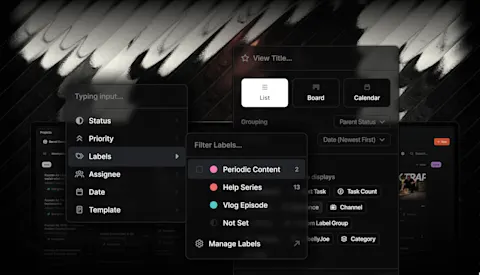
Tag it in your project tool as experiment or swing so you can filter for it later. Ship it. Then measure it against your own average, not against the outlier chart.
Most weeks the experimental slot will underperform the proven format, and the data you get back is still worth more than the outlier-copy data, because nobody else has run this exact test. When one of the swings does hit, it hits harder than any borrowed shape you've ever run, because you're the first person to publish that idea and the reference set updates around you instead of the other way around.
Why this compounds if you actually stick with it
There's a second-order effect that's easy to miss. Every experimental slot you run teaches the team's taste, not just the account's numbers. The editor starts recognising which angles feel new versus derivative. The strategist starts flagging outliers in your own back catalogue that nobody else in your niche is copying yet. The shooter starts pitching swings unprompted.
Over a quarter, that's thirteen swings taken. Over a year, it's fifty-two. Even if the hit rate is one in ten, a year of experiments can leave you with five original formats that other teams will pull from next year. The outlier spreadsheet everyone else is working from starts including your videos.
You're the outlier now. That is a structurally different position to be in than the team who spent the same quarter shipping the thirteenth variant of a hook someone else invented in Q1.
How to run this on your calendar this week
- Pull your last thirty days of posts and find the one that beat your own average. That's the shape of your own outlier, not a competitor's.
- Add a single experimental slot to next week's schedule. Label it so you can filter for it in analytics later.
- Fill that slot with an idea that has zero external proof. Preferably sourced from a customer conversation nobody else has heard.
That's it. One slot. Ship it every week for a quarter and re-read your analytics with the label filter on.
The outlier chart is a description of what already ranked
The hill-climbing metaphor is generous to how most content planning actually looks. A lot of the time it's less a systematic climb and more a scramble to catch whatever the last person up the hill dropped on their way. Either way, the mechanism is the same: the search stays inside the shape of what's already ranking.
Nothing about the current AI-assisted ideation workflow changes this. If anything it accelerates the problem, because the models are trained on the same reference set and their suggestions cluster even harder toward the mean of what's already working.
The one slot a week is a cheap hedge against that. You keep the outlier work paying the bills, and you keep a small, protected line of experiments that answers a different question: what would show up in the reference set next year if we were the ones putting it there.