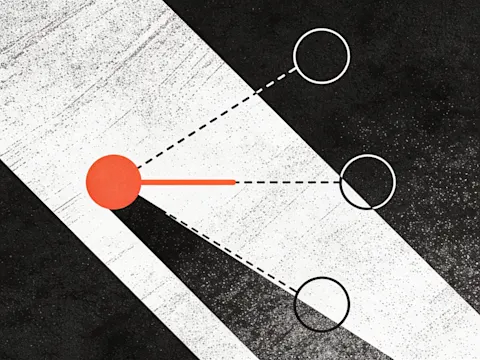
Steve Jobs didn't invent the touchscreen, the phone, or the internet browser. He took three existing technologies and combined them into something that didn't exist before: the iPhone. That single combination changed an entire industry and generated over $2 trillion in value.
This is how most breakthrough ideas actually work, and once you see the pattern, you can systematize it.
Source: Nextcore, "How to generate the most Creative Ideas"
Most "Original" Ideas Are Recombinations of Existing Ones
There's a persistent belief in creative work that good ideas arrive from nowhere, that the best creators have some innate talent for generating original thoughts that lesser minds simply can't access. This belief is comforting because it lets everyone else off the hook. If creativity is a talent, then not having ideas is just bad luck, not a fixable problem.
But the historical record tells a different story. Shakespeare borrowed plots from existing stories, Italian novellas, English chronicles, Greek myths, and recombined them with language and character depth that made them feel entirely new. Romeo and Juliet was adapted from Arthur Brooke's poem "The Tragical History of Romeus and Juliet," which itself was adapted from an Italian story. The combination of familiar plots with unprecedented language depth is what made the work feel original.
Einstein didn't start from zero either. He built on existing physics theories, Maxwell's equations, Lorentz transformations, the established framework of thermodynamics, and found connections between them that nobody else had seen. Relativity was a recombination of known physics, not a creation from vacuum.
The pattern repeats everywhere you look. James Dyson took the concept of a vacuum cleaner and combined it with industrial cyclone mechanics, the kind used in sawmills to separate dust from air, and created the first bagless vacuum. Two existing ideas, one unexpected connection, one new product that dominated its market for decades.
Originality, in almost every case, is recombination.
Idea Stacking Turns Creativity Into a Repeatable Process
Idea stacking is the deliberate practice of collecting ideas from diverse sources and systematically looking for connections between them. It turns creativity from a mystical talent into a repeatable process.
The concept is simple. You absorb widely, you log everything interesting, and you regularly review your collection looking for unexpected pairings. The output is ideas that feel creative because nobody else has combined those particular inputs before, even though each individual input is well-known.
Think of it like a software stack. No one builds an application from scratch anymore. You take a database, a framework, an authentication library, a hosting service, and you combine them in a way that serves your specific use case. The individual components are commodities. The combination is the product.
Idea stacking works the same way with content. The individual ideas, the topics, formats, angles, references, are available to everyone. Your unique combinations are what make your content distinctive.
Step 1: Absorb Relentlessly (But Create First)
The first instinct when you hear "absorb more" is to start consuming. Read more books, watch more videos, listen to more podcasts. Fill the brain with inputs so there's more raw material to work with.
This instinct is half right. You do need diverse inputs. But Nextcore makes a critical distinction: create before you absorb. Start making content, even if it's basic, even if it's rough, before you go on an absorption binge. The reason is practical. If you absorb without creating, you become a collector of other people's ideas with no framework for applying them. You accumulate knowledge without developing the muscle for turning knowledge into output.
Creating first, even poorly, gives you a lens for absorption. When you're actively trying to make things, you notice different details in what you consume. A filmmaker watches movies differently than a casual viewer, a songwriter hears music differently than a listener, and a content creator who is actively publishing reads articles and watches videos through the filter of "what can I use?"
The absorption itself should be deliberately diverse. Read outside your industry. Watch content in formats you don't produce. Listen to podcasts on topics you know nothing about. The more diverse your inputs, the more unusual your potential combinations become. If you only consume content marketing material, your idea stack will produce ideas that every other content marketer could also produce. But if your inputs include metallurgy, behavioral economics, and competitive sailing, your combinations will be genuinely novel.
Step 2: Write Down Every Interesting Idea, Even Unrelated Ones
The second step is pure logging. Every time you encounter something interesting, a concept, a fact, a phrase, a framework, a question, write it down. Don't filter for relevance. Don't ask "how does this apply to my work?" Just capture it.
A marketing concept you heard on a podcast. A physics principle from a documentary. A personal observation about how your team collaborates. A sentence from a novel that stuck with you. A statistic that surprised you. All of it goes in the log.
The reason you don't filter is that filtering requires you to predict which ideas will be useful, and that prediction is almost always wrong. The ideas that produce the best combinations are usually the ones that seemed irrelevant when you first wrote them down. You can't predict unexpected connections. You can only create the conditions for them to emerge, and those conditions require a large, diverse, unfiltered collection.
The format matters less than the habit. A notes app, a physical notebook, a voice memo folder, a shared document. What matters is that the barrier to logging is as low as possible. If capturing an idea requires opening an app, navigating to a folder, and formatting a note, you'll skip it half the time. If it requires typing three words into whatever is already open, you'll do it consistently.
Over weeks and months, the log grows. And the log is where the real value accumulates, because each new entry increases the number of possible combinations exponentially. Ten ideas can combine in 45 unique pairs. One hundred ideas can combine in 4,950 pairs. A thousand ideas can combine in nearly 500,000 pairs. The math is on your side if you keep logging.
Step 3: Connections Emerge When You Review Deliberately
The third step is where idea stacking actually produces output. You review your log and actively look for ideas that weren't meant to go together but could.
The prompt is simple: "How can I mix these? What happens if I apply this idea to that problem?"
Nextcore gives an example that illustrates the mechanic perfectly. Most podcasts are recorded in a room, usually a studio or office. Most vlogs are recorded outside, in the real world. These are two established formats with their own conventions. But what happens if you combine them? A podcast recorded outside, in a forest, in ruins, on a mountainside. "I've never seen someone doing a podcast outside in a forest or in ruins," Nextcore observed. Two common formats, one uncommon combination, and suddenly you have something that feels fresh even though both inputs are ordinary.
The same logic applies to content topics. Take a well-known business concept like customer retention and combine it with an idea from ecology, like how ecosystems maintain biodiversity through interdependence. The combination produces a fresh angle on retention that nobody else is writing about because nobody else has those two ideas in the same log.
The practice itself takes 15 to 20 minutes. Pull up your log, scan through recent entries, and look for pairs or clusters that spark something. Not every combination will work. Most won't. But the ones that do will feel genuinely original because they are, in the combinatorial sense. Nobody else has your specific collection of inputs, so nobody else will arrive at your specific combinations.
The Same Combination Pattern Spans Every Creative Field
It's worth sitting with these three examples because they span completely different fields and time periods, yet the pattern is identical.
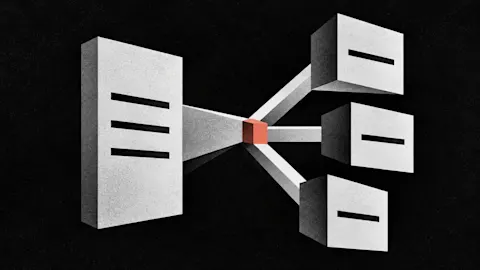
Jobs combined existing technologies (touchscreen + phone + internet browser) into a new product. The inputs were all available to every other technology company in the world. Sony, Nokia, and Motorola all had access to the same components. The combination was the breakthrough, and the combination required someone who had absorbed enough diverse knowledge (technology, design, calligraphy, music distribution) to see the connection.
Shakespeare combined existing narratives with unprecedented language and psychological depth. The stories were available to every other playwright. The combination of those stories with Shakespeare's specific collection of inputs, his knowledge of rhetoric, human nature, theatrical convention, and the English language at its most flexible period, produced something new.
Einstein combined existing physics frameworks into a unified theory. The equations were available to every other physicist. The combination required someone who had absorbed broadly enough (philosophy of science, thought experiments, the practical problems of clock synchronization at train stations) to see connections that specialists missed.
In each case, the mechanism is combination, not isolated genius. And combination is a process you can replicate if you build the system for it.
Teams Multiply the Combinatorial Advantage
For an individual creator, idea stacking can work with a personal notes app and a weekly review habit. You absorb, you log, you review, you combine.
For agencies and content teams, the math changes. You have 5 or 10 or 20 people absorbing different inputs every day. The potential combination space is enormous, but only if you capture it. A shared idea-stacking document that the whole team contributes to creates what I'd call compound creative capital. Every person's inputs become raw material for every other person's combinations.
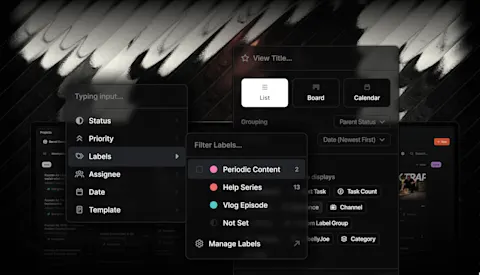
At Clipflow, we think about this as a shared repo for creative raw material. The way a development team uses a shared code repository so that one engineer's utility function is available to every other engineer, a content team should use a shared idea log so that one person's interesting observation is available to every other creator on the team.
The implementation is straightforward. A shared document or database where anyone on the team can add an idea in under 30 seconds. No formatting requirements, no categorization needed, just the raw idea with enough context that someone else can understand it later. Then a regular review session, probably weekly, where the team scans the log together and looks for combinations.
The compound effect is real. A team of 8 people each logging 3 ideas per week generates roughly 125 ideas per month. After 6 months, that's 750 ideas in the shared log, producing over 280,000 possible unique pairs. The team doesn't need to be more creative than any individual creator. They need a system that captures more inputs and creates more opportunities for combination.
This is probably the most underused advantage that teams have over solo creators. A solo creator has one brain absorbing inputs. A team has many. But without a shared logging system, those inputs stay siloed in individual heads and the combinatorial advantage never materializes.
You don't need more creative people. You need more captured inputs and a regular practice of combining them. Creativity has never been about generating something from nothing, it has always been about connecting things that already exist in ways nobody else has connected them. The only question is whether you're doing that by accident, waiting for inspiration to strike, or by design, building a system that makes unexpected connections inevitable.