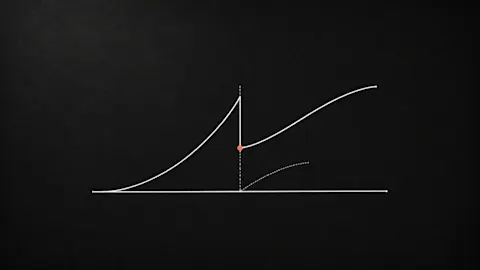
You've tested hook variants, tightened the edits and rewritten the website twice this year, and the numbers haven't moved. At some point it's worth asking whether the content is the thing that's broken. Alex M H Smith's argument is that it probably isn't, and that you're asking marketing to fix a problem sitting one level above it.
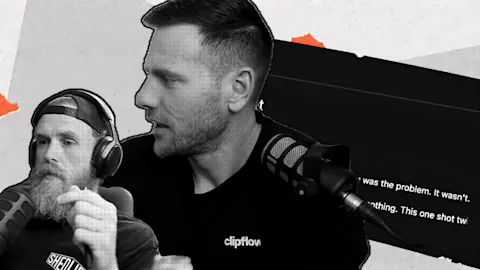
Source: Alex M H Smith's video "Why most marketing is a waste of money (strategy pro explains)", uploaded 6 September 2026. The "marketing is presentational" argument, the car analogy and the Octopus Energy example are his. The three-step audit for a content team is ours.
Marketing shows what's already there
Smith is a strategy consultant and the author of No Strategy. His starting point is that marketing is presentational. It's how a business shows off what already exists, so it can only be as strong as the thing it's presenting.
If that thing is the same as what forty other operators in your category sell, polish won't rescue it. A sharper hook gets more people to look at an offer they've already seen from everyone else. Smith's analogy is putting gas in the tank of a car with no wheels.
This is uncomfortable for anyone who runs content, me included, because the content is the part we can change by Friday. Rewriting a caption feels like work. Asking what the business offers that nobody else does feels like a conversation for another quarter, so it keeps getting moved.
A business that picked up the phone
Smith points at Octopus Energy, which he calls one of the most successful British companies of the last 20 years. Energy is a boring category and, in his words, the marketing is appropriately boring.
What set Octopus apart was customer service. In a market where it was close to impossible to get a person on the phone, Octopus answers and the person can solve your problem. Smith says it's not rocket science, and it was still unique in that category because the other suppliers had spent decades building operations to keep callers out. Octopus designed the whole business around it: the technology, the staffing, the hiring and the incentives.
Customers could check that against their own experience. A business like that hardly needs clever marketing, because the plain description of what it does is already different from the competition. A business without that difference needs clever marketing constantly and still gets little back.
Where the lever sits
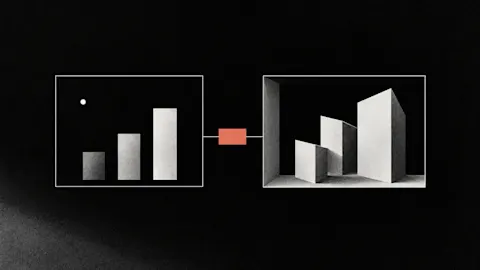
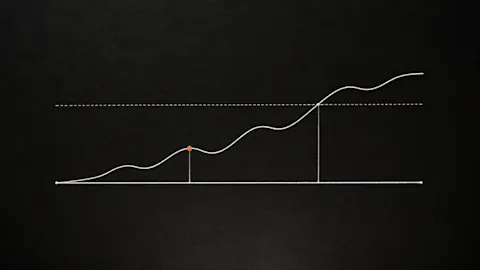
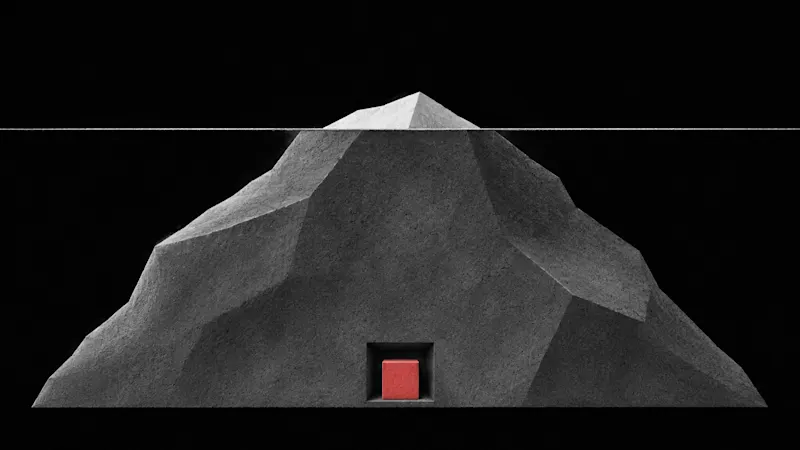
Smith describes marketing as the visible tip of an iceberg, with the business's unique value sitting underneath it. The useful question is at that lower layer. What specific thing do you deliver that nobody else in your category can honestly claim, and does the buyer want it?
Both halves matter. Something unique that buyers don't care about is a quirk. Something buyers want that every competitor also provides is the entry fee for the category.
I think this also explains a pattern we see in content teams. The same team with the same skills gets very different results for two clients, and the easy conclusion is that one account had better ideas. More often one client had something to say that nobody else in their market could say.
A three-step audit for this week
Smith's video is about strategy for whole businesses. This is how we'd apply it if you run the content.
- Write the sentence. In one sentence, name the specific thing your customers get from you that they can't get elsewhere. Skip the category ("we do content ops") and name the outcome.
- Run it past three competitors. Open the three competitor sites you most envy. Could each of them honestly put the same sentence on their homepage? If so, no hook variant will fix it.
- Ask three recent customers. Ask what they'd tell a friend they get from you, and write down their words exactly.
If the customers' answers match your sentence, the strategy is doing a lot of the marketing's work, and your content can say it plainly. If they don't match, pay attention to what the customers said, since it's often more specific than your own version. That gap is where the next month of thinking should go, ahead of the content queue.
What changes in the content afterwards
When the sentence holds up, the content gets easier to make. Hooks can state the difference directly, examples come from the thing only you do, and you stop needing a new angle every week to make a familiar offer look fresh.
When it doesn't hold up, you've saved yourself another six months of hook tests and website rewrites aimed at the wrong layer. That's a worse week and a better quarter.