Most creators obsess over the hook and the ending. The middle is where they actually lose people.
Source: This concept comes from Kallaway's "How to Become a Storytelling Genius (Dopamine Ladders)", which builds on his earlier Master Storyteller framework around context, conflict, and the "but/therefore" rule.
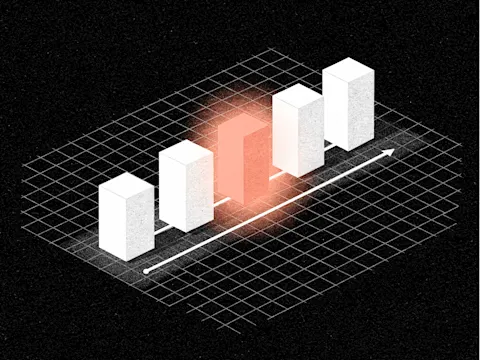
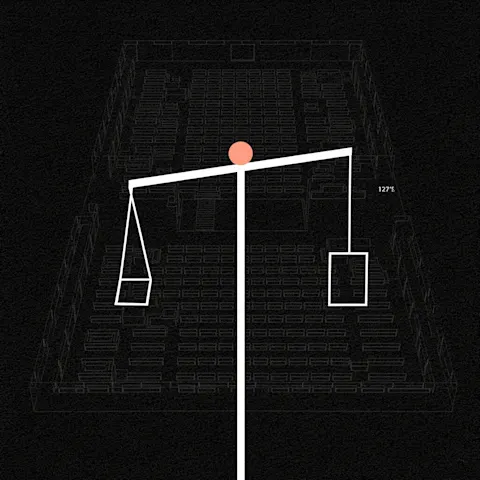
If you pull up the retention graph on almost any YouTube video, the steepest drop rarely happens at the end. It happens somewhere between 30% and 60% through the video, right in the body where the initial hook energy has faded and the payoff still feels far away. That middle section is the retention cliff, and most scripting processes have no system for catching it before the video ships.
Mid-Video Retention Leaks More Than Your Hook or Ending
We spend so much time workshopping the first 30 seconds. Hooks, promises, proof, pattern interrupts. And then we spend time crafting a memorable close, a callback to the opening, a clear CTA. The body of the script gets treated as the "information delivery" section, a container for the value the hook promised.
This is backwards in terms of where attention actually leaks.
YouTube's own data consistently shows that mid-video retention is where the majority of viewers decide to leave. They've already committed to the opening and survived the transition from hook to body, so the early friction is gone. Then somewhere around the two-minute mark on a seven-minute video, or the five-minute mark on a fifteen-minute video, they drift.
The reason is structural. The opening created curiosity. The body resolved that curiosity without creating new curiosity. There's nothing pulling the viewer forward anymore, so they leave. The exit isn't a decision. It's the absence of a reason to stay.
Escalating Micro-Hooks Keep Viewers Climbing
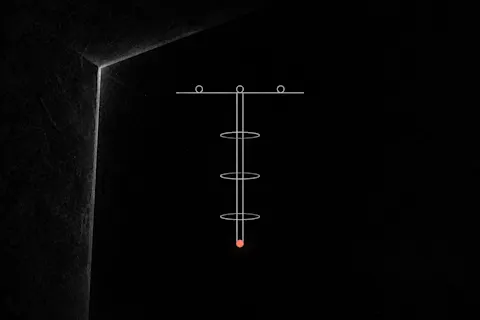
A dopamine ladder is a series of escalating micro-hooks distributed throughout the script body, each one creating a small spike of curiosity or anticipation before the previous one fully resolves. Think of it like nested open loops, but with escalation built in. Each rung on the ladder raises the stakes slightly higher than the last.
Kallaway's framework draws directly from the South Park storytelling rule. Trey Parker and Matt Stone have talked about how every beat in a South Park script connects with "but" or "therefore" rather than "and then." "This happens, but then this happens, therefore this other thing happens." The "but/therefore" structure creates cause-and-effect chains that pull the viewer forward because each beat introduces a complication or a consequence.
A dopamine ladder applies that same connective tissue to the macro structure of a video. Each section of your script should open a new question, introduce a new tension, or raise the stakes before fully closing the loop from the previous section. The viewer's brain is always holding at least one open thread, and that thread is what keeps them watching.
The key word is "escalating." A flat series of equally interesting points doesn't create a ladder. It creates a plateau. The intensity, specificity, or stakes of each micro-hook should increase as you move through the script, so the viewer feels like they're climbing toward something rather than walking across level ground.
Context and Conflict Drive Every Curiosity Spike
The mechanism behind dopamine ladders is the dance between context and conflict. Context gives the viewer enough information to understand the situation. Conflict introduces the tension, surprise, or complication that makes them want to know what happens next. Every section of your script needs both.
This plays out clearly in practice when you look at a real example.
Say you're making a video about pricing strategy for agencies. Your hook promises "the pricing model that doubled our revenue in 6 months." A flat script would deliver that model, explain it, give examples, and wrap up. A dopamine ladder version looks different:
Section 1 delivers the model (resolving the hook promise early), but introduces a new tension: "When we first implemented this, we lost three clients in two weeks."
Section 2 explains why those clients left (resolving that tension), but raises the stakes: "The clients we lost were paying us $4,000/month each. What replaced them was worth 10x that, but only because we made one specific change to how we pitched."
Section 3 reveals the pitch change (resolving the previous hook), but opens a bigger loop: "This works in every sales conversation now, with one exception that nearly killed the whole approach."
Each beat resolves something and opens something new. The viewer is never in a state of full resolution until the very end. And because each new tension is more specific, more personal, or higher-stakes than the last, the pull gets stronger as the video progresses.
Specificity is what makes each rung land. "We lost clients" is vague. "We lost three clients paying $4,000/month each in two weeks" is specific enough to feel real, and real things create curiosity about what happened next.
Every Script Section Should Open a Loop Before Closing One
If you're scripting at volume, you need a way to audit this without relying on gut feel. We've started testing a practical mapping approach that takes about five minutes per script.
Take your script and break it into sections (most scripts already have these, whether they're marked by H2s, topic shifts, or visual transitions). For each section, identify two things:
- What open loop does this section close?
- What new open loop does this section create?
If any section closes a loop without opening a new one, that's your retention cliff. That's the moment where the viewer has no forward pull and their thumb starts drifting toward the next video.
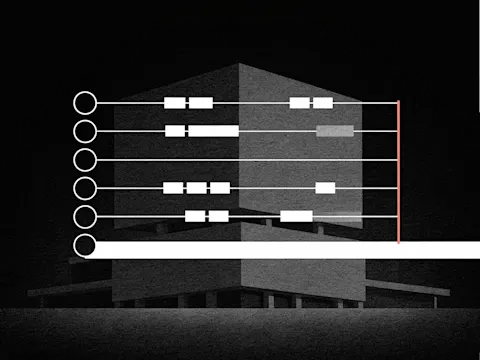
The ideal pattern looks like overlapping waves. Loop A opens in section 1. Loop B opens in section 2 while Loop A is still partially unresolved. Loop A closes in section 3, but Loop C opens. Loop B closes in section 4, Loop D opens. The viewer is never holding zero open loops.
For content teams reviewing scripts before they go to production, this becomes a simple checkpoint: mark every loop open and loop close in the script margin. If you ever see two closes in a row without an open between them, flag it. That's where the mid-video drop will happen.
Distributed Curiosity Outperforms Front-Loaded Hooks
Standard hooks front-load curiosity. They assume that if you can get someone into the video with a strong enough opening, the content itself will carry them through. This works when the content is genuinely riveting from start to finish, which is rare.
Dopamine ladders distribute curiosity across the entire runtime. They assume that attention is a resource that depletes and must be renewed. Each micro-hook is a renewal point.
The difference shows up clearly in retention data. A video with a strong hook and flat body will have high initial retention that slopes steadily downward. A video with a strong hook and a dopamine ladder will have high initial retention with a series of small recoveries throughout the body. Those are the moments where the retention line flattens or even ticks upward because a new curiosity spike landed.
Most creators front-load all their tension into the first 30 seconds and then wonder why 60% of their audience leaves before the halfway mark. The hook got people in. Nothing kept them climbing.
There's a useful analogy from software development here. A standard hook is like a one-time authentication: the user proves they're interested once, and then you trust that interest will persist. A dopamine ladder is like session management with periodic re-authentication. You keep checking that the user is still engaged by giving them new reasons to stay, and each check-in refreshes their commitment.
A Five-Minute Script Review Catches Your Biggest Retention Leak
For individual creators, the dopamine ladder is a revision tool. Write your script, then go back and check: where are the curiosity gaps? Where does a section end with resolution and no new tension? Add the micro-hooks in revision, not in the first draft. First drafts should focus on getting the ideas right. Second passes should focus on keeping viewers through those ideas.
For content teams scripting at volume, this needs to be systematized. A dopamine ladder checkpoint should be part of the script review stage, the same way you'd check for hook quality, CTA placement, or brand voice consistency.
The checkpoint is straightforward. A script reviewer reads through and marks every point where a new loop opens and every point where a loop closes. If the ratio of opens to closes isn't roughly balanced throughout the body, or if there's a dead zone where multiple loops close without new ones opening, it gets flagged and sent back to the writer with a specific note: "Section 3 closes the pricing tension without opening anything new. Add a micro-hook before the transition."
This takes about 5 minutes per script once you know what you're looking for. For a team producing 8 to 12 videos per month, that's an hour of review time that directly targets the biggest retention leak most channels have.
Kallaway's deeper point is that storytelling is tension management. A dopamine ladder is a tension management system. You're not adding more content to your videos. You're redistributing the curiosity your content already generates so it covers the entire runtime instead of clustering at the front.
The videos that hold attention all the way through aren't necessarily better researched or better produced. They're better at never letting the viewer reach a state of full resolution until the final seconds. Every rung on the ladder is a reason to keep climbing. Remove a rung, and the viewer steps off.