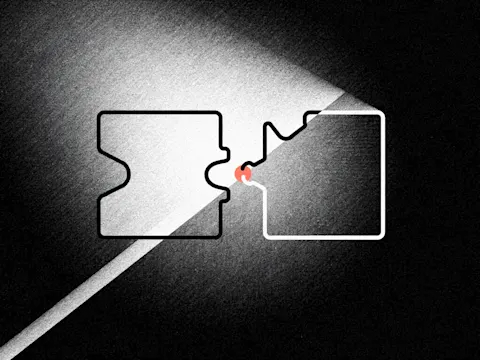
The hook and the payoff of a short-form video are usually treated as one problem. Write a clever opener that leads into the point you're making, ideally in a single seamless line, ideally clever enough that the transition feels earned. That constraint is why most business accounts freeze up before they even open the camera. It's also unnecessary.
Source: The tactic comes from a trend on Instagram that got labelled "what's bro doing," which does not have a single credited originator. The two-part curiosity and payoff framing, and the observation that most business accounts treat the two as coupled when they aren't, are ours.
The trend that made the decoupling obvious
Someone films another person from across a room or a car park with the caption "what's bro doing?" and then cuts to whatever the person was actually doing. The caption is a curiosity hook that has nothing to do with the underlying video. The cut resolves it. The whole thing works even though the setup and the payoff aren't logically related.
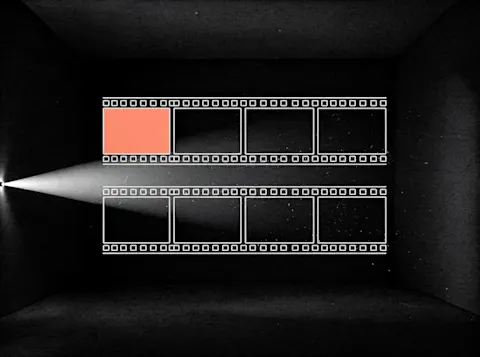
The trend caught on because the format demonstrated a split most short-form advice keeps trying to blur: the job of the first three seconds is to stop the scroll, the job of the rest of the video is to reward the person for staying, and those are two different problems that can be solved with two different ideas.
Most short-form advice assumes the two are coupled
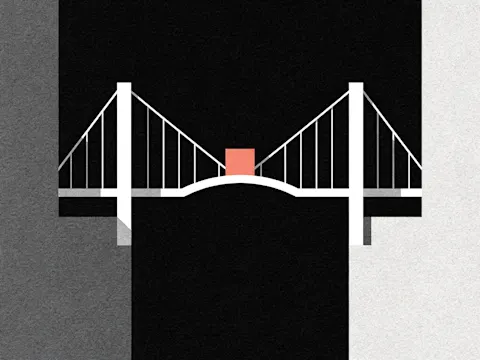
Most short-form advice trips over this without saying it. Write a hook that teases the value. Open with the pain point your product solves. Lead with a shocking stat from your industry. All of those instructions are trying to build a bridge from the scroll-stop to the payoff, and they only work if you can find a scroll-stopping angle inside your own subject matter.
For a lot of business accounts, the subject matter is not scroll-stopping on its own. Accounting software, cold storage logistics, dental supply, agency operations, none of those categories provide much material for a genuinely arresting opener. If the assumption is that the hook has to be topically related to the payoff, the account is stuck writing hooks about accounting for people who aren't already interested in accounting. That rarely works.
Decoupling the two removes that constraint. The hook only has to stop the scroll, the payoff only has to be worth the seconds the person just spent, and the two can be about entirely different subjects without the video falling apart.
The API version of this
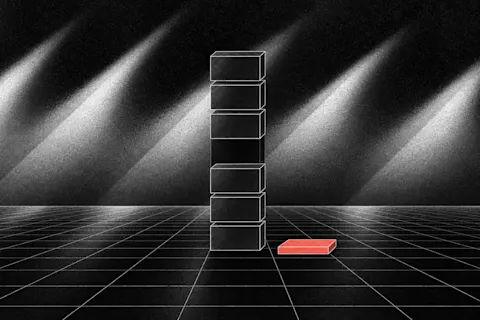
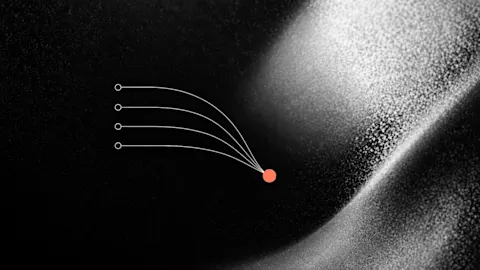
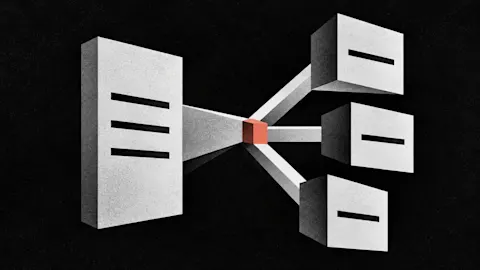
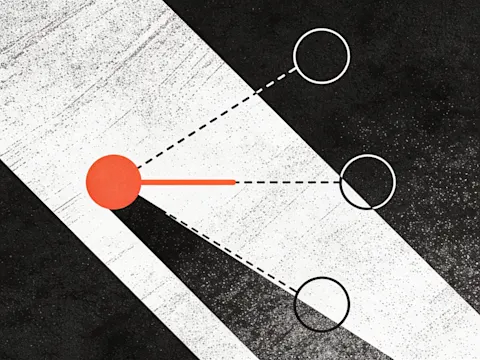
The clearest way to think about it, at least for how we write video briefs, is that the hook and the payoff are two independent functions with a shared contract. The hook's contract is "return the viewer's attention for the next two seconds." The payoff's contract is "give them a reason not to swipe away by the end." You compose them, you don't inline them.
Software people already do this instinctively with landing pages. The above-the-fold headline is chosen for stopping power and the section below it does the actual argument, and nobody tries to fit both jobs into the headline because it's obvious the two jobs need different tools. Short-form video has been slower to accept the same split, mostly because the "one seamless line that hooks and delivers" version wins the highlight reels on Twitter and looks like the target to aim at.
The seamless version is a fine target when you can hit it, but treating it as the minimum is what freezes accounts up. The workable minimum is a decoupled hook and payoff joined by a bridge line, and most business accounts will get more usable content out of that minimum than out of chasing the version that only works when the topic hands you a clever opener.
What "goofy" is actually doing in the trend advice
The reason so much short-form advice says "act a little weird" or "be a bit goofy" is that goofy hooks are one reliable way to hit the scroll-stop contract without needing your topic to cooperate. Goofy travels across categories. A logistics operator can film themselves doing something faintly ridiculous for two seconds and then cut to an actual point about pallet fees. The pallet-fee content did not need to become funny for the hook to work. The hook did its job, the payoff did its job, and the fact that they weren't about the same thing is a feature.
Goofy is not the only tool. Any tool that reliably buys two seconds of attention counts. A visual mystery, an out-of-place object, an unfinished action the viewer wants to see resolved, a physical setup that reads as "wait, why is that there." The specific tool matters less than accepting that the tool doesn't need to be on-topic.
The bridge line is doing more work than it looks
Decoupling gives you permission to open with anything, but the transition still has to land. If the hook does its job and then the payoff has nothing to do with the visual expectation the hook set up, the viewer feels the trick and swipes. The connective tissue can be a single sentence, sometimes a single word. Something like "which is exactly how we ended up building X" or "and this is what it made me realise about Y" is usually enough to bridge unrelated hook and payoff without making the viewer feel misled.
The videos where the whole thing breaks are the ones where the operator got so pleased with the goofy hook that they forgot to write a payoff at all. A weird opener followed by thirty seconds of unrelated talking-head is worse than a boring opener followed by a useful point, because the viewer stayed for the setup and got nothing back in return.
The version that actually ships this week
Pick your next planned video, leave the payoff alone, and write the hook separately. Two seconds of something visually or tonally arresting, unrelated to the topic if it needs to be, connected to the payoff by a single bridge line. Shoot the hook in one take, shoot the payoff as you would have shot it anyway, and edit them together with the bridge in between.
The rest of the account can carry on producing whatever it was producing. The only change is in how the first three seconds get planned, and that's the difference between a video that gets watched and a video that gets scrolled past before the payoff has a chance to work.