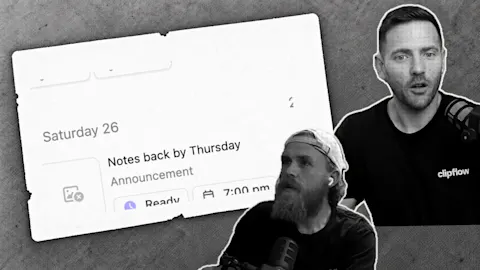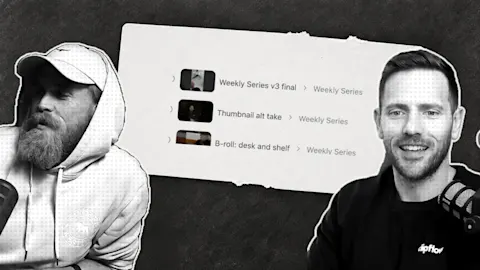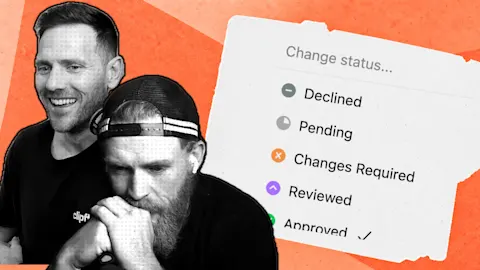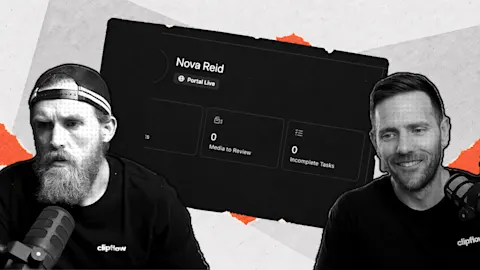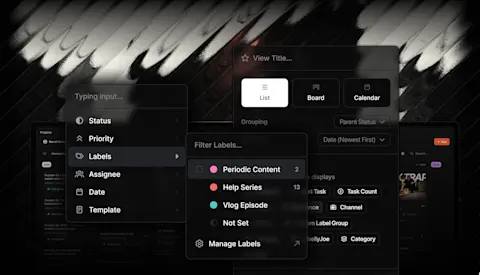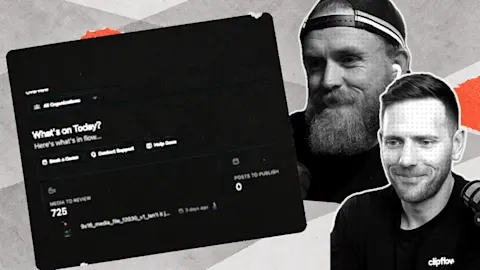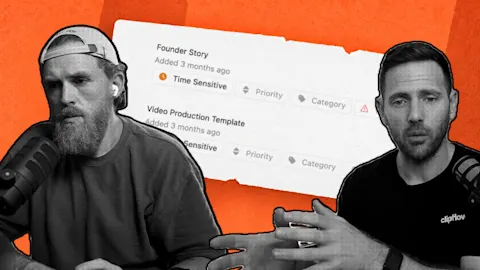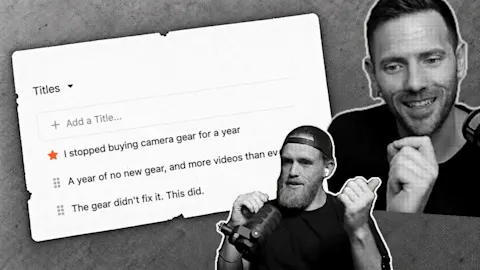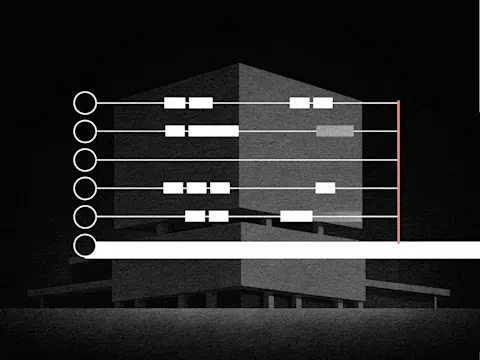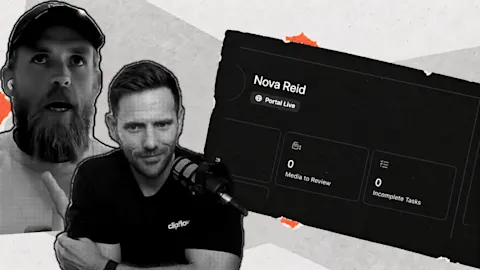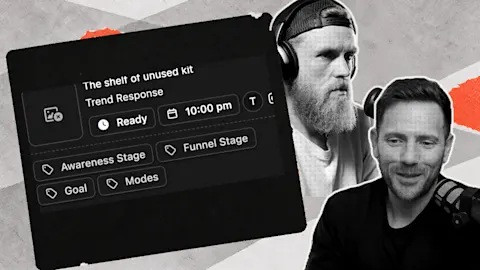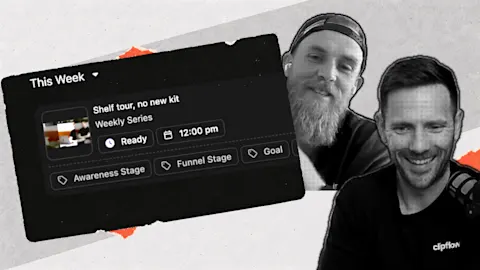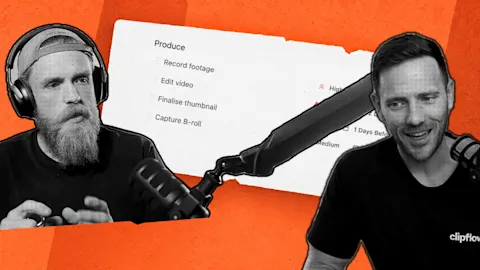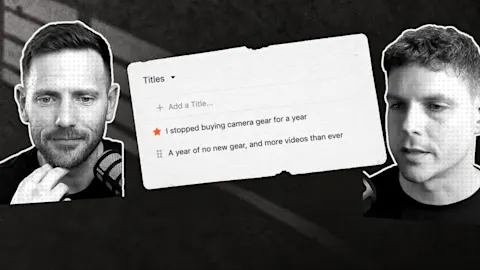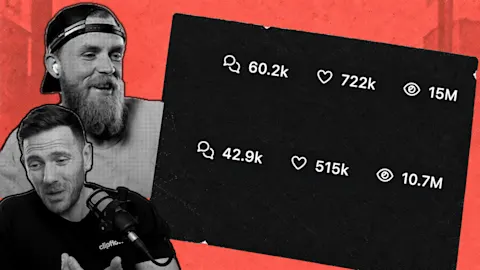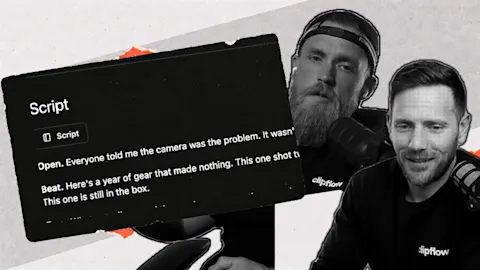
When several editors share one project and the file names mean nothing to anyone else, a leadership meeting turns into guesswork. Tristan Kermode's fix was a single board showing how far each editor had got, plus enough short check-ins to keep it true.
Source: This comes from Ryan Growth's 73-minute interview with Tristan Kermode, published in October 2026. Tristan spent more than five years as Head of Content for Iman Gadzhi and now consults on content operations. Details about that team are spoken claims we haven't checked, and both people sell services in this area. The smaller-team version at the end is ours.
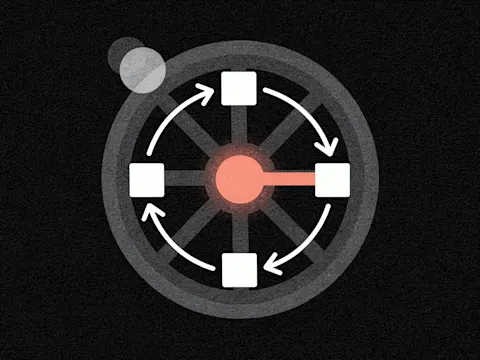
The system has four parts
| Part | What it does | The problem it solves |
|---|---|---|
| One hub | Holds every piece of work and its percent complete | Nobody can see the state of the week |
| Short calls | Bring problems up several times a week | Issues surface too late |
| Clear channels | Separate daily work from urgent problems | Everything feels equally urgent |
| A problem-solving stack | Tells juniors who to go to and when | Every fire lands on the head of content |
We'd add a fifth rule from the interview, which is to decide what the content is for before any of this matters. The first section below covers that.
Start with work worth talking about
Tristan starts before any process, with one rule: don't build a personal brand until you've done work worth talking about. Teach "how I" and leave "how to" to other people, which means publishing only methods you've run yourself.
The other question to ask early is "to what end, and who am I serving?" Treating a channel only as a lead machine burns people out, and a team that doesn't know the purpose of the content can't make good calls on its own.
To apply this, write one line at the top of your board that says who the content serves and what it should lead to. A cleaning business might write "homeowners deciding who to trust with their keys, leading to quote requests." Anyone reviewing an edit can check the work against that line.
Keep all the work in one hub
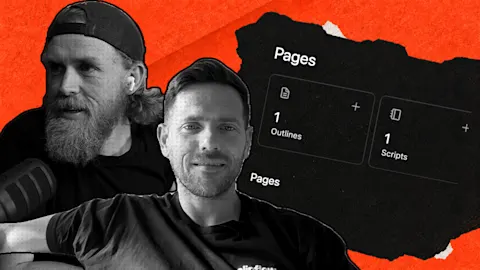
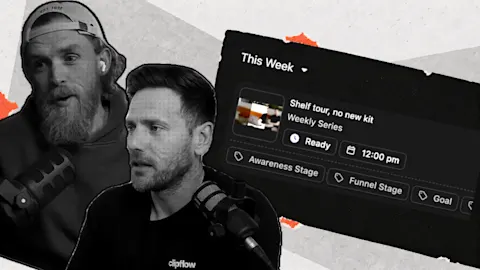
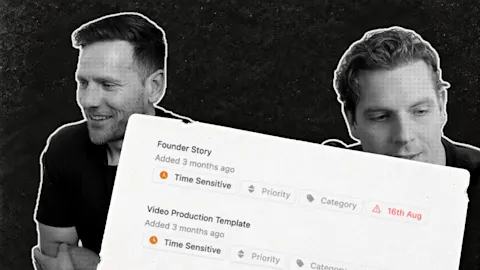
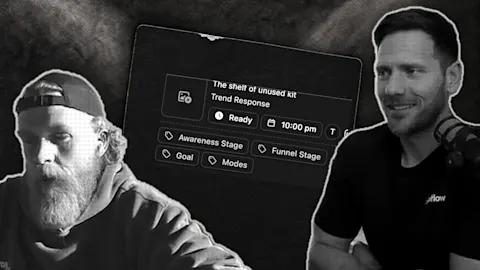
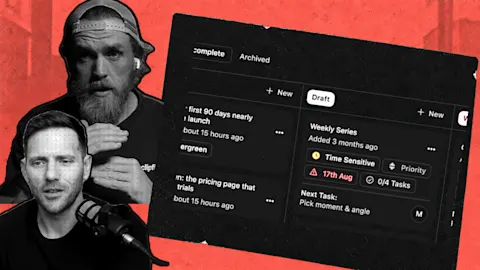
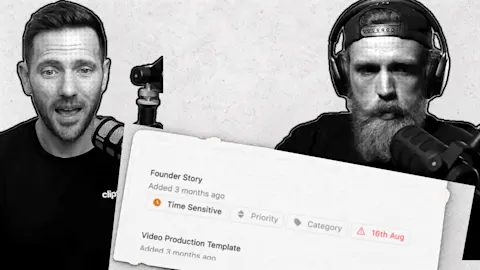
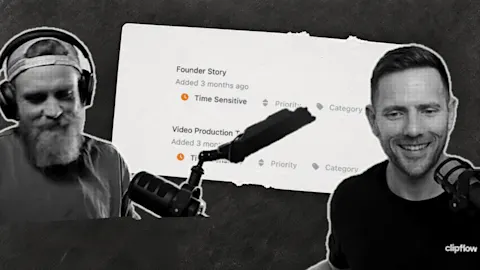
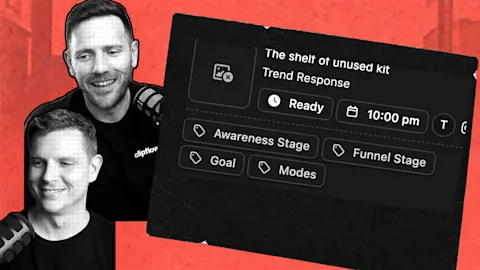
Tristan used Notion and says Airtable is fine too. The hub held long-form, short-form, course modules, ads, briefs and meeting notes in one place.
The detail worth copying is percent complete by editor. Several editors working through a course with names such as "P2 M1" and "P2 M6" gave leadership nothing they could read at a glance. Tracking each editor's edits and percent complete for the week gave them a forecast built on numbers.
A board only works if people update it. Tristan calls out people who don't, and we would too, because one stale column makes everyone stop trusting the rest.
To apply it, add one field for percent complete and one for the expected finish date to whatever tool you already use. Review both before your weekly leadership check-in. We build software for this kind of work, so we aren't neutral on tools, and a shared spreadsheet will do this job at a small scale.
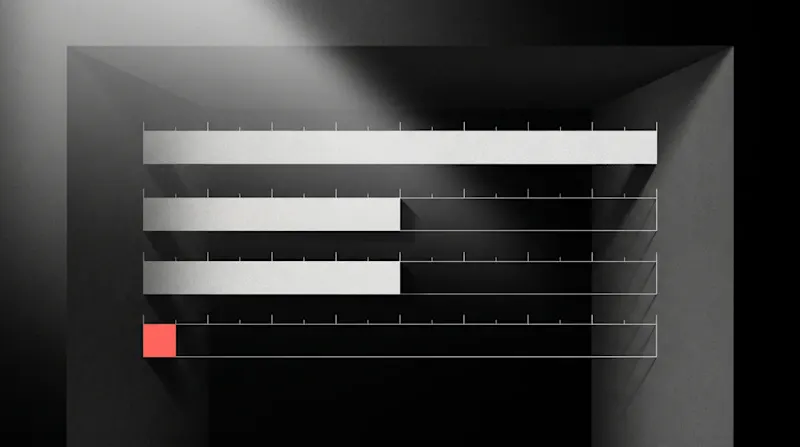
Example: four reels are due Friday. On Wednesday the board shows one at 100%, two at 50% and one at 0%. You now know to move the fourth reel or find help, two days before anyone would otherwise have noticed.
Run several short check-ins
Tristan's team moved from three calls a day to three every other day: one for short form, one for long form and one for wider content and design. The number matters less than the principle that one meeting a week is too few when work moves daily.
Each call should cover what's blocked, what's late and what needs a decision. We'd also keep reviews fast, because a day lost waiting on feedback is a delay you can avoid at no cost.
To apply it at a smaller scale, try a 15-minute call on Monday and Thursday. Add a third only if work is still slipping between them.
Separate daily talk from urgent problems
Slack, or something like it, handled day-to-day work. WhatsApp went to discipline leads for anything urgent or after hours.
The split matters because it lets people switch off. If everything arrives in one channel, every message feels like a possible emergency, so people either watch it all evening or miss the one that counted.
To apply it, agree what counts as urgent and write it down. A post going out tonight with the wrong link counts, and a caption tweak for next week doesn't.
Teach juniors who to go to
Tristan trained every junior on three questions: who reviews this, who chases other departments, and when to escalate. The aim was to spend time managing people and egos instead of every fire.
To apply it, write the three answers on one page for each role and walk new starters through it in week one. When someone brings you a problem the page already covers, send them back to it.
How to take on the operations side
Tristan's way into the role was to start as a maker and pick up operations one piece at a time. The first was leading the daily content call, then building the hiring form, then hiring. If you're an editor who wants this job, or an owner looking for someone to grow into it, those three tasks are a sensible order.
On AI, the interview's advice is to use it beside the craft. Screen hires for curiosity and taste, and let models break a podcast into notes for writers or draft thumbnail variations. If a designer can now see ten thumbnail drafts in the time one used to take, use that time for more rounds of improvement. Treat Ryan's token spending comparisons in the interview as one person's economics.
When this works, and when it doesn't
The full version suits a team with several editors or formats running at once, especially on a long project with many parts. Tristan's course-module example is specific to education brands, and a smaller team may need much less.
If you're a solo owner with one editor, skip the calls and the channels and keep the board. Two people can share one list and a weekly review.
Quick reference
| Team size | Hub | Check-ins | Escalation |
|---|---|---|---|
| Owner and one editor | One shared list with a status | One weekly review | A text message if something can't wait |
| Two to five people | Board with percent complete and due dates | Two 15-minute calls a week | Written definition of urgent |
| Several editors or disciplines | One hub with a view per discipline | Up to three calls, split by format | A named lead per discipline and a one-page stack |
Choose the row that matches your team, and on your next Monday add the percent complete column before you do anything else.