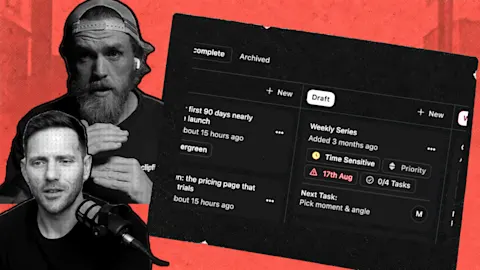
Most people building a personal brand right now are asking the wrong questions: which phone, which editor, which time slot on Instagram. The question that actually matters is who's running the content operation while the founder is on camera.
Ronny Mitchell made his first million at 22 by running that role for other people. He laid out his entire playbook for being a creative director in a recent video. It's worth the watch because if you're building anything content-driven, an agency, a business media team, or your own personal brand, you're either doing this job yourself or paying someone else to do it, and most operations underestimate how much of a job it really is.
Source: All frameworks and numbers in this piece are from Ronny Mitchell's YouTube video "How To Become a $1M Creative Director in 2026."
The 'owner' of the account, not the face
A creative director owns the social media account: the person behind the camera, not in front of it, who owns the outcome. The film analogy is the useful one. Christopher Nolan's name is on Inception and Oppenheimer because the director is who you praise when the movie works and who you blame when it doesn't. Content teams are the same, even if they're typically more 'invisible' heroes, where the creator supplies the credibility and the face while the creative director supplies the strategy, the sequencing, the shoot direction, the hiring, and the process. When views drop, they're the one being told "fix it."
Which is why so many people who want the title can't actually do the job. It's a role that's been romanticized. Dan Martell gave his head of media a Porsche and now every 22-year-old with a camera wants in, but what Dan really gave to Sam wasn't the car, it was the agency and control to lead. He identified strong character traits, the 'figure it out' ability and the drive to make it work and then set him loose. The trade for that upside is total ownership of an outcome you don't fully control, in front of a founder with extremely high standards for how the thing they're famous for looks. That's why the role sees a lot of churn: high pay, high impact, and you're on the hook for a metric you influence not control.
The job is a bundle of six overlapping skills
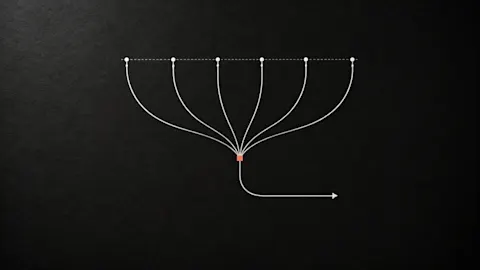
Ronny defines the job as a bundle of six skills rather than one talent. If you're evaluating yourself or someone you're hiring, this is a decent checklist:
- Video editing. Not motion graphics or sound design, those are nice to have. The core skill is sequencing raw footage into a narrative that pulls the viewer from start to finish.
- Camera work. Lighting, framing, lens choice, shutter speed, enough craft to make a shot look good without a full production crew, and the creative taste to make it look bad when it needs to as well.
- Creative strategy. Which ideas to shoot, in what format, with which hook. This is the one most people don't have because it requires pattern recognition, and pattern recognition only shows up after you've posted a lot of videos and iterated on the ones that worked.
- Conversational threading. The ability to make the person on camera comfortable and ask questions that unlock the good material. If you ask someone "what's the most important thing you've ever learned," their brain freezes, because there's no leaderboard in their head. Working around that is a specific skill.
- Teaching. Turning what they do intuitively into a process someone else can follow. You can't scale the team without this one.
- Managing creatives. Doing all five of the above through other people once the operation gets bigger.
Most people applying for these roles have two or three of the six and the best way to get the rest, is through reps. Ronny's blunt take is that your time isn't inherently valuable, someone can hire a VA overseas for a fraction of your rate, and your time only becomes valuable once you can point to an outcome you produced for someone.
Views, followers and revenue
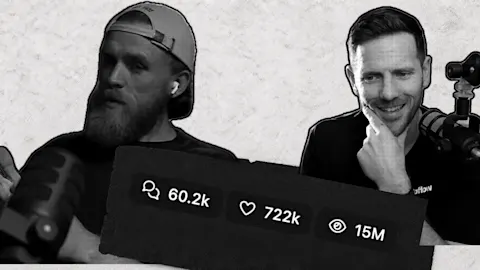
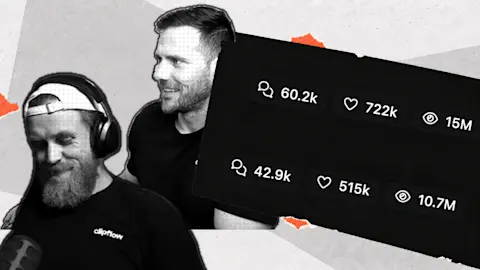
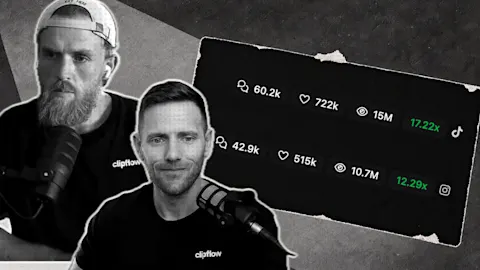
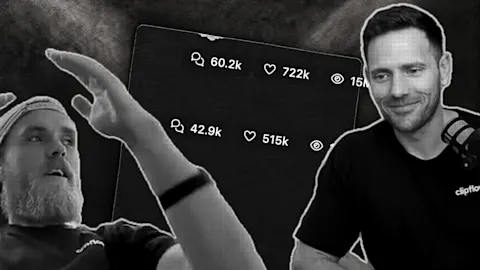
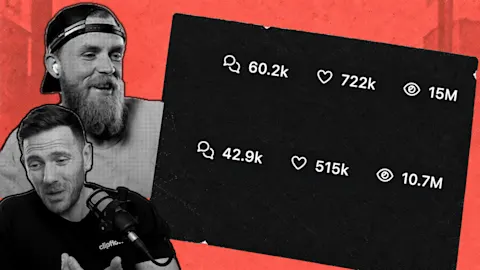
Views are a leading indicator. If you're posting and nothing's landing, the content isn't working yet. But views alone don't mean much because you can stack millions of them on 7-second B-roll montages that convert nobody into a follower.
Followers are the lagging indicator on the content itself. If the views aren't converting into follows, the hooks or the ideas are wrong.
Revenue is the six-to-twelve month lag. Ronny says he's typically seen a 90-day to 6-month buffer between gaining followers and making real money from them. If your creator is running content to grow a business, revenue eventually matters more than the vanity metrics. If they're running it for fame, followers and views are the ceiling of what they'll care about. Have that conversation about which one they're optimizing for before you start, because the answer changes what content you make.
Two frameworks worth stealing
The BITE framework for structuring what the creator says on camera:
- Bait: a strong statement they believe.
- Illustrate: they elaborate on it.
- Tail: a story, analogy, or example that maps to it.
- End: the takeaway or action step.
Useful for keeping conversational-format shoots on rails so the words actually get used in an edit.
The Ideation Rolodex for finding videos to shoot:
- The creator's own best-performing videos. Iterate on what's already worked for them.
- Competitor accounts. Track hooks and topics performing in the same niche.
- Comment sections of viral videos in the niche. Usually the fastest source of angles.
- Reddit. Search key terms, find threads with the most replies, steal the questions people are actually asking.
Both frameworks work because they solve the same problem: not starting from a blank page every week.
The role most content operations skip
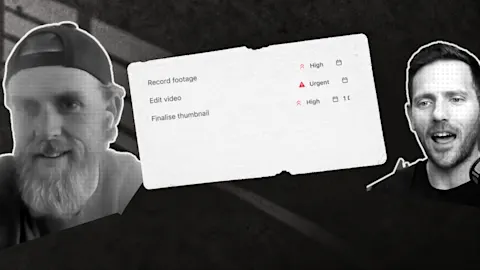
If you're running an agency, running content for a business, or trying to grow a personal brand yourself, the creative director is the piece of infrastructure most operations skip past. People hire an editor, a shooter, sometimes a strategist, and duct-tape them together with a shared Notion doc and Monday meetings. Then the content plateaus at month eight and nobody knows why.
The job goes beyond making videos. It means owning the outcome across six overlapping skills, keeping the creator producing material worth editing, and turning the whole operation into a process that survives the moment the founder gets tired of showing up.
Most content operations spend year one hiring editors and shooters, then discover in year two that nobodywas running the whole thing or that they ended up spending way too much time themselves doing it. Hire (or become) the creative director first.
Without someone in that seat, the month-eight plateau can become a ceiling you can't out post.