The One Shot format is a single unedited clip with one line of text sitting in the middle of the screen. No jump cuts, no B-roll, no captions bouncing on every beat. And on our @useclipflow Instagram over the last month it has outperformed the videos we spent five to ten times longer editing.
Source: The format and the rebuild playbook are from our own team. Zac, our Head of Content, wrote the original version in Clipflow Weekly Issue 2. The example we lean on (a shot of Darrell typing a script by hand with the line "when you get so sick of the Claude outputs you rawdog type a script by hand like it's the 1920s") is a post from that rebuild. The editorial extensions here, why an unedited clip beats an edited one in 2026 and how production budget should shift as a result, are the blog layer on top.
Editing became the place we were hiding a weak idea
Spending a shoot day cutting to beat, colour matching B-roll and pushing text keyframes around feels productive. The output looks like content, the timeline fills up, the render finishes. But all of that motion is downstream of one earlier question, and if the answer to that question is soft, no amount of editing rescues it. The question is whether the idea is worth watching in the first place.
We noticed this on our own account. Instagram took the original @useclipflow page down, so we had to rebuild from zero. Every post now had to earn its own reach with no cushion of existing followers or algorithmic trust to hide behind. The videos that worked in that environment were, almost every time, the ones with the least production on top.
Unedited clips work because the visual is the pattern interrupt and the text is the payload
A jump cut heavy edit fights the feed by trying to keep the eye moving. A static clip fights the feed by breaking the assumption that a video needs to be doing something visually to be worth stopping on. Both work, but they work through different mechanisms and the static version leans on one skill instead of five.
The visual only has one job, which is stopping the scroll. A close-up of hands typing, a wide of a whiteboard mid-argument, a shot of a coffee going cold next to a laptop, any of those hold long enough for the text to land. The text then does the actual persuasion work, because it names a specific feeling the viewer recognises. If you get the text right, the viewer is nodding by the second line. If you get the text wrong, no visual craft compensates.
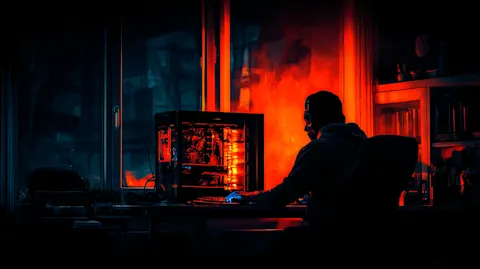
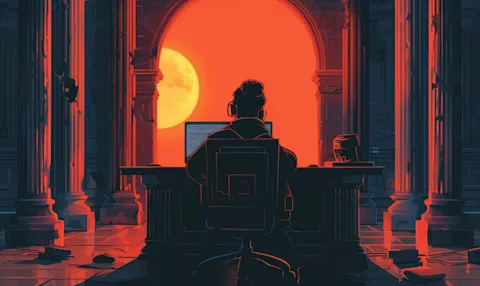
Our best-performing One Shot on the rebuilt account was Darrell at his desk, typing. The line on screen was "when you get so sick of the Claude outputs you rawdog type a script by hand like it's the 1920s." Our audience makes content with AI. That specific frustration, of hitting the wall where the model's outputs stop feeling usable and you go back to writing by hand, is one they feel weekly. The clip named it directly and got a lot of "same" in the comments, which is the exact response you want when the goal of the post is recognition, not entertainment.
Text that names the feeling beats text that describes the shot
A common miss on this format is writing text that narrates what's happening on screen. "Editing a video at 2am" or "Trying to hit a deadline" is a caption, and captions don't do the work.
The version that lands names the feeling the viewer already has, not the thing they can see. "When you get so sick of the Claude outputs you rawdog type a script by hand like it's the 1920s" is a feeling. "Trying a new AI tool for the seventh time this month" is a feeling. "Realising the client wanted the video in a different aspect ratio after you already delivered" is a feeling. The visual gives them a place to sit and the text tells the viewer that someone else lives inside their week.
A useful test is to cover the video and read only the text. If the line still lands without the shot, the text is doing its job. If you need the visual to make sense of the words, the text is probably descriptive, and the viewer scrolling with sound off in 2 seconds isn't going to get there.
How to run one this week
- Pick one thing your audience actually feels. A frustration, a small win, an unspoken truth from inside their week. Something they wouldn't say out loud but would nod at silently.
- Find a visual that already holds that feeling. Don't stage it, film what you're already doing. Hands, a screen, a whiteboard, a coffee, a car interior on the way home. Whatever's honest.
- Write one line of text that names the feeling. A line the viewer would recognise as being about them, not a caption for the shot.
- Post it. Skip music unless it changes the feeling, skip captions, skip the CTA. One clip, one line, live.
Give it a week and check which posts pulled the most comments, not the most views. Comments on this format tend to be short recognition ("this is me," "who told you," a specific reply about their own version of the frustration), and they're the signal that the text hit. Reach is loud, but recognition is what brings the viewer back.
The production budget probably needs to move
If a One Shot takes 20 minutes end to end and an edited piece takes half a day, and the One Shot is the one pulling recognition on the feed, the editing budget was mispriced. Editing still matters, but most of that editing time was buying something the format didn't need.
We're running roughly a third of the weekly output as One Shots and the rest with fuller production, reviewing the mix every couple of weeks. My suspicion is the ratio moves further toward static over the next few months, at least for the job of showing up on the feed with something the audience recognises themselves in. The heavier edits stay for the pieces that carry an idea a static frame can't, like product walkthroughs, side by side comparisons, anything with real explanatory work in it.
If your team is spending most of the week in the timeline and the account isn't growing, the editing isn't the leak.