Content Operations
State of Flow
Learn how teams build channels that grow sustainably — with systems, not stress.
How to use an AI agent for SEO without losing control of your site
Give the agent real search data, fix your old pages first, publish slowly, and write down what it may never do.
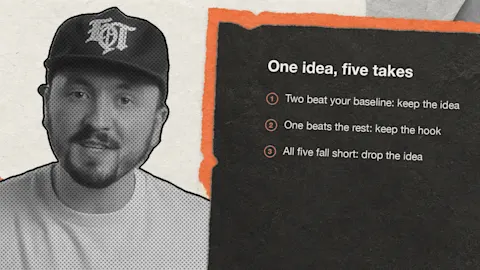
How to test a video idea with five takes before you build a series
Nate Gaffney's five-take trial reel method, and how to turn the idea that survives into a series people follow.
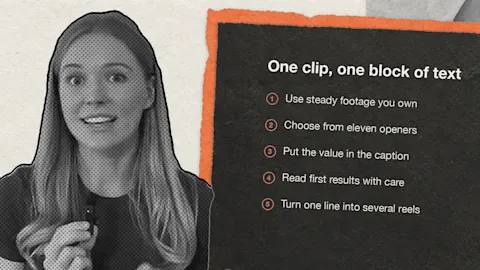
How to make a six-second text reel from footage you already have
The format, eleven openers and caption shape behind our 52 text reels, with the numbers from their first month.
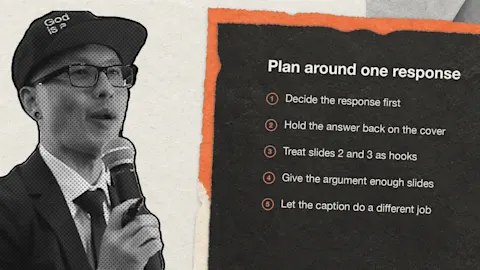
How to plan an Instagram carousel around the one response you want
What 100 carousels from @therishishine show about covers, slide counts and asking for comments, turned into a 12-slide plan.
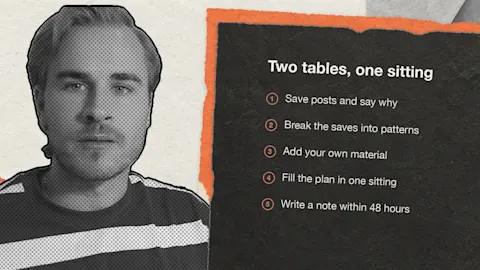
How to plan a week of content in two hours
A weekly routine you can run in a spreadsheet: save posts with a reason, break them down, plan the week, and review what ran.
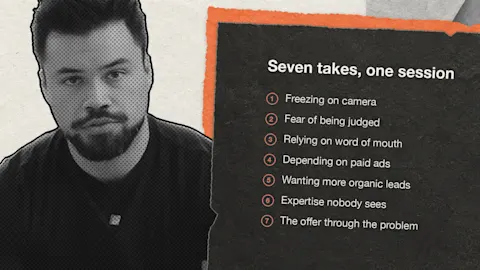
How to film seven different ads in one session
One customer problem per take, two attempts each, and one correction between them: a filming method from Brandon Willington's ads course.
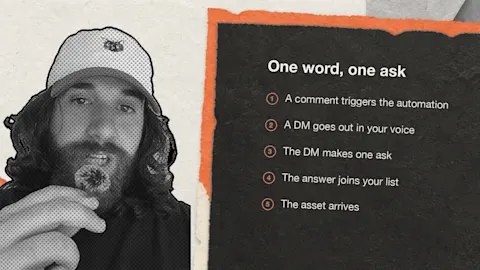
How to set up a comment-keyword lead magnet
Turn a post into a list: one matching asset, one word, one automated DM with one ask, and a simple count from comment to customer.
Use trial reels to fix a reel you've already made
Change one thing per test, starting with the opening, and read the retention curve to find where viewers leave. Jamie Brindle tests several edits per post.

How to write text hooks that lift 3-second retention
Paste a reel's transcript into Claude with our prompt to get five overlay candidates, one per formula. Ship the strongest, hold two and watch hook rate.

Short-Form Story Compression: How to Tell a Complete Story in Under 60 Seconds
Build each script from one setup line, one tension point and a specific resolution, plus two or three concrete details and two context-conflict beats.

The Four Script-Killing Blockers (And the Systematic Fix for Each One)
Kallaway's framework asks four questions of a stuck script: what's interesting, the hook, the story and the engagement. The first no is your bottleneck.
Present Tense, Real Tension: The Two Writing Switches That Make Any Story Immediately Better
Jeven Dovey's two fixes for a flat script: rewrite the narration as if it is happening now, and name what is at risk. A reviewer can check both.

The 5-Step Script Framework: From Blank Page to Published Video Without Losing Viewers Once
Write in Kallaway's order: packaging, outline, intro, body, outro. Each stage gets its own review, so the video delivers what the title set up.

How to Write a Hook That Makes People Physically Stop Scrolling
Kallaway's three-step hook: a first line that names the topic and earns a lean-in, a one-word reversal (but, however, yet), then a line that opens a loop.

The Content Audit No One Wants to Do
Map every step from idea to publish, mark who owns each one, and time yourself for two weeks. Steps owned by nobody, or only by you, are where work stalls.

The Contrast Principle: One Editing Framework That Works Every Time
Contrast is the most reliable tool in the editing toolkit. Emotion, music, location, energy. When something changes, people pay attention.

The Hopes, Dreams, Fears, Blockers Framework for ICP Profiling
Know your audience's psychology, not just their demographics. Four levers that make content feel like it was made specifically for them.

View-to-Follower Ratio: The Only Content Metric That Matters
Views without followers is just facial recognition. Optimize for the ratio, not the count.
Page 1 of 2 · 31 articles
Authors