Most businesses chase engagement. The ones with real loyalty have figured out behavioral conditioning.
Someone asked Alex Hormozi how to build a cult-like following. His answer reframed the entire question: stop trying to build a cult.
Steve Jobs didn't set out to build one. He tried to make the best computer in the world. Martha Stewart didn't set out to build one. She gave recipes. Dave Ramsey didn't set out to build one. He gave simple steps to get out of debt. Peloton didn't set out to build one. They made working out measurable and social. CrossFit didn't set out to build one. They gave clear programming and trackable benchmarks.
The cult came after. Every time.
Because they focused on making something people could use and win with. The loyalty was a byproduct of repeated positive outcomes.
Source: Alex Hormozi, "Stop Trying to Build a Cult-Like Following"
What Is a Reinforcer?
A reinforcer is someone (or something) that gets people to repeat a behavior.
When someone follows your advice, gets a good result, and comes back for more, you've become a reinforcer. They now associate you with winning. So they keep listening, keep following, keep buying.
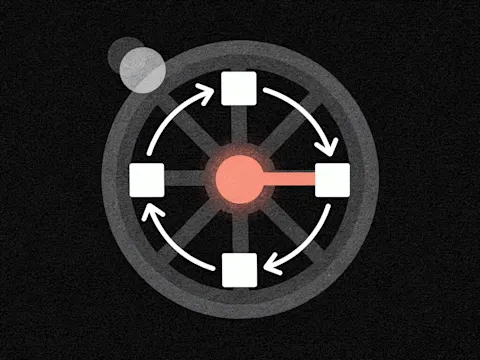
The loop looks like this:
- You give an instruction
- They follow it
- They get a good outcome
- They attribute part of that outcome to you
- They come back for more
That last step is the reinforcement. You're not building a "following" in the vanity metrics sense. You're becoming the person they trust to help them win. And trust, once earned through outcomes, compounds.
The 4 Steps to Becoming a Reinforcer
Hormozi broke it down into four components. If you do all four, you condition yourself as a reinforcer.
1. Show you have what they want.
You need to demonstrate visibly that you control the outcome they're chasing. If you're teaching people how to grow on social media, your own presence should show evidence of that. If you're teaching agencies how to retain clients, you should have clients who've been with you for years.
Proof of concept, not flexing. They need to see that the thing they want is achievable and that you've achieved it.
2. Give instructions that work.
Not theory. Not motivation. Behavioral instructions they can follow and get a good outcome. This is where most content fails. It's interesting but not actionable. It entertains but doesn't change behavior.
The instructions need to be non-obvious enough to be valuable but clear enough to execute. If someone follows your advice and nothing happens, you're not a reinforcer. You're noise.
3. Prove it with third-party credibility.
Your claims need external validation. Other people got results too, not just you. Testimonials, case studies, data, press, whatever form it takes. The point is that believing you isn't a leap of faith. There's evidence.
This is why user-generated content and customer stories matter more than branded content. When someone else says it worked, the claim becomes credible in a way your own claims never can be.
4. Be like them.
They need to see themselves in you. If you feel too different, too polished, too far ahead, the gap becomes a barrier. They might admire you but they won't follow your instructions because they don't believe those instructions apply to their situation.
Relatability means showing the mess, the process, the uncertainty. When they see you as a version of themselves who figured something out, they believe they can figure it out too.
Why Martha Stewart Has a Cult
Hormozi studied Martha Stewart specifically because her following is so disproportionate to what she actually does. She gives recipes. That's it.
But here's how the attribution loop works:
She gives a recipe. Someone makes it. Their family says "this is amazing." That person thinks "thank you, Martha." The outcome (a great dinner, praise from family) gets credited to Martha, even though she wasn't in the kitchen.
Do that for 30 years across millions of people and you get "Martha changed my life." And she did. Because she educated. She changed behavior. She gave instructions that yielded outcomes.
The same pattern applies to Dave Ramsey. He gives simple financial steps. Someone follows them, gets out of debt, and screams "I'm debt free!" on his show. The debt-free scream IS the attribution loop made visible. The outcome gets credited to Dave.
Peloton works the same way. Clear programming, measurable progress, visible milestones. You hit a PR, you share it, you credit the platform and the instructor. CrossFit. Same thing. Follow the WOD, track your Fran time, tell everyone you do CrossFit.
The cult comes from outcomes people can't shut up about.
Your Enemy Doesn't Have to Be a Person
Movements need something to push against. But Hormozi's advice was clear: don't point at a person or a company. That's negative, it puts focus on something else, and it often backfires.
Point at a concept instead.
Apple's enemy was complexity. Skool's enemy is spending all day doing stuff you hate, complexity and lack of fun. For content operations, the enemy might be scattered tools, wasted time, or content that doesn't move the needle.
The enemy gives your audience something to rally against without making you look petty or combative. They're not following you because you hate someone. They're following you because you stand for something.
Product-First Beats Personality-First
The through-line in all of this is product obsession, not audience obsession.
Steve Jobs wore the same thing every day so he didn't have to think about clothes. The computer was the main thing. Hormozi wears the same thing for the same reason. The platform is the main thing.
The consistency that comes across as "brand" is actually just focus. It's what happens when someone cares more about the work than the perception.
Hormozi put it directly: "I don't think I would have the brand I have without the books. People could use them and then they change their life."
The books ARE the brand. The value delivered is the thing that creates the following.
So the question isn't "how do I build a cult-like following?" The question is "what percentage of people's lives can I actually impact?" Make that the north star and the following takes care of itself.
It's just very hard because there are so many distractions.